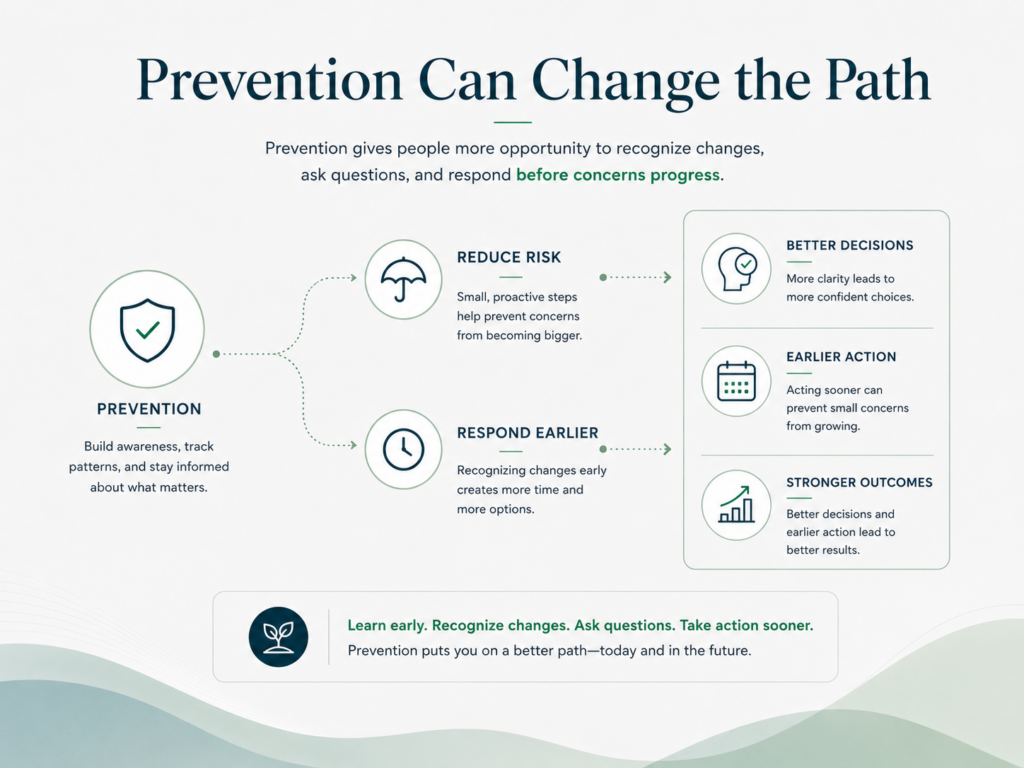
Prevention starts by recognizing changes early and taking action before they progress. When symptoms are identified sooner, outcomes improve and options expand. E.R.I.C. focuses on helping individuals understand what to look for—and what to do next.
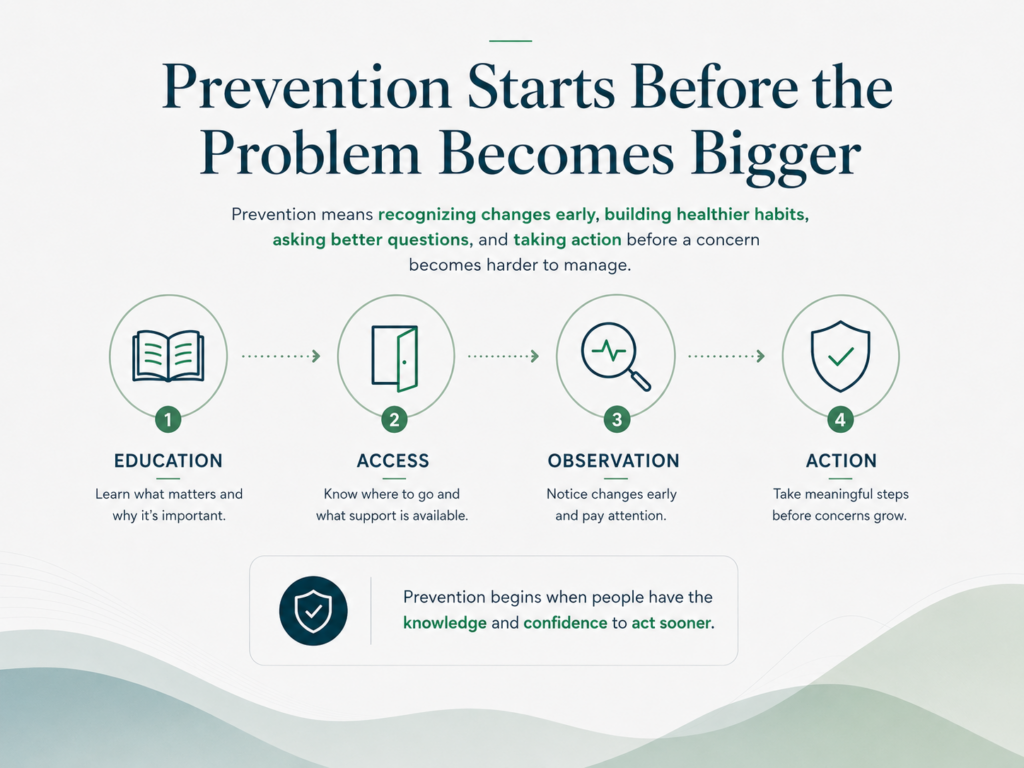
Prevention is not always about stopping something from happening. Sometimes, prevention means recognizing a change early, building healthier habits, asking better questions, and taking action before a concern becomes harder to manage.
At E.R.I.C., prevention is rooted in education, access, observation, and action. We help people, families, and communities understand what to look for, what patterns to pay attention to, and what steps may help support better long-term outcomes.
Prevention begins when people have the knowledge and confidence to act sooner.
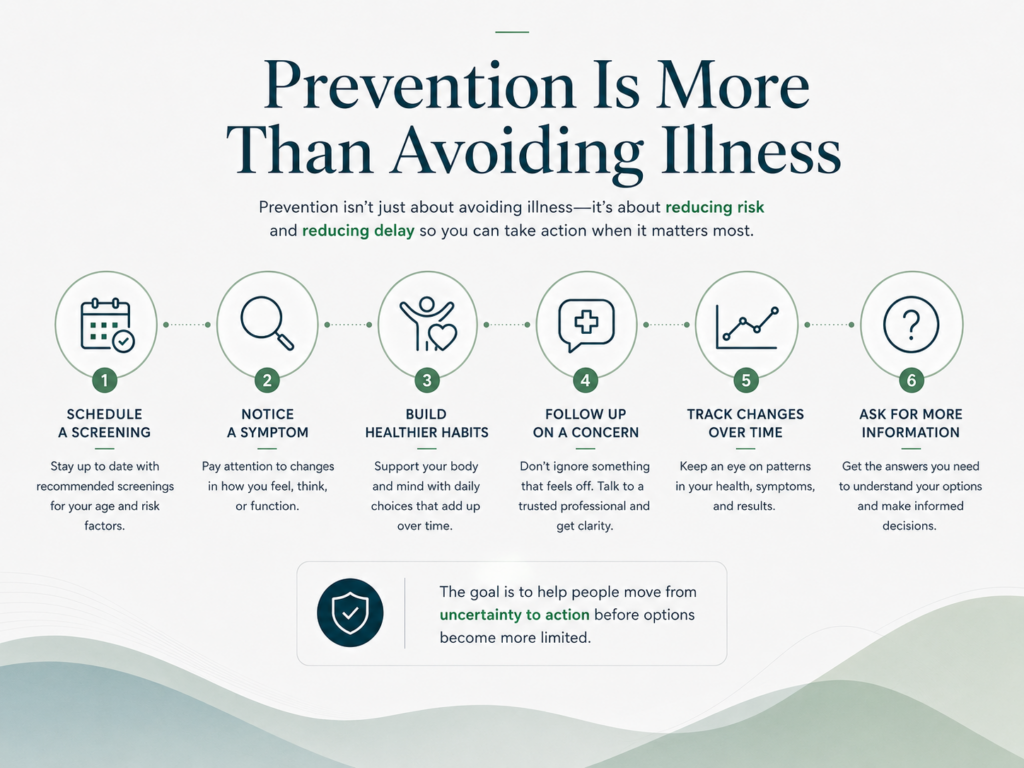
Prevention can mean reducing risk, but it can also mean reducing delay.
It may look like scheduling a screening, noticing a symptom, building a healthier routine, following up on a concern, tracking a change over time, or asking for more information when something does not feel right.
The goal is to help people move from uncertainty to action before options become more limited.
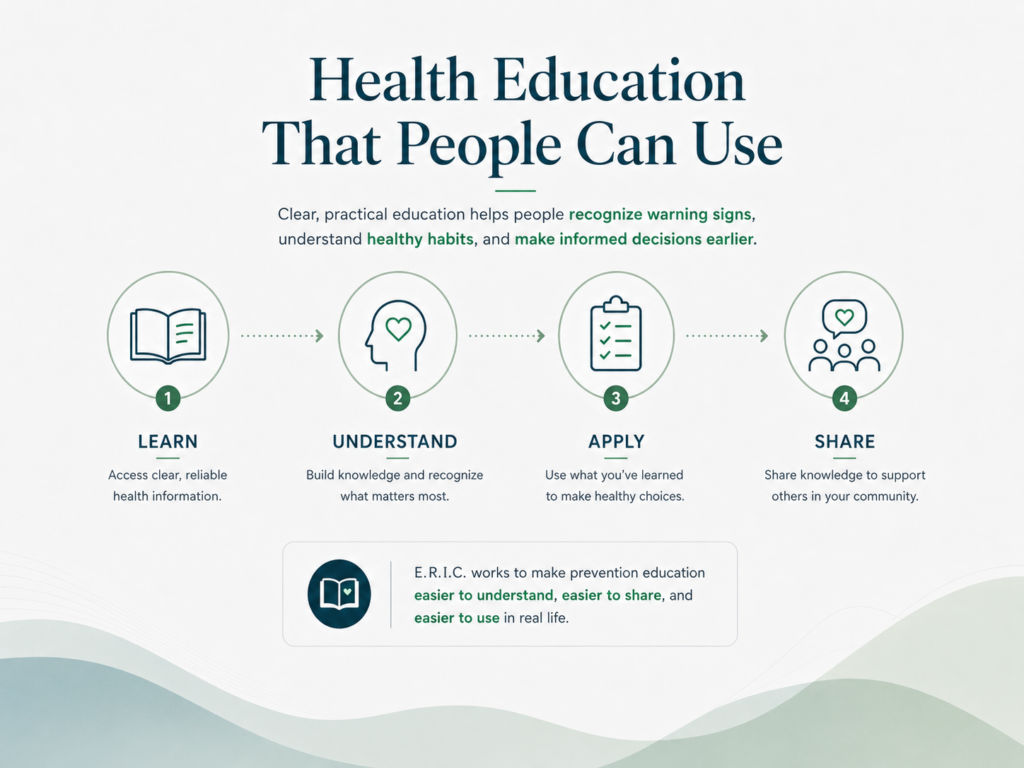
Clear, practical education is one of the most powerful tools in prevention.
When people understand warning signs, risk factors, healthy habits, self-check practices, and next steps, they are better prepared to make informed decisions earlier.
E.R.I.C. works to make prevention education easier to understand, easier to share, and easier to use in real life.
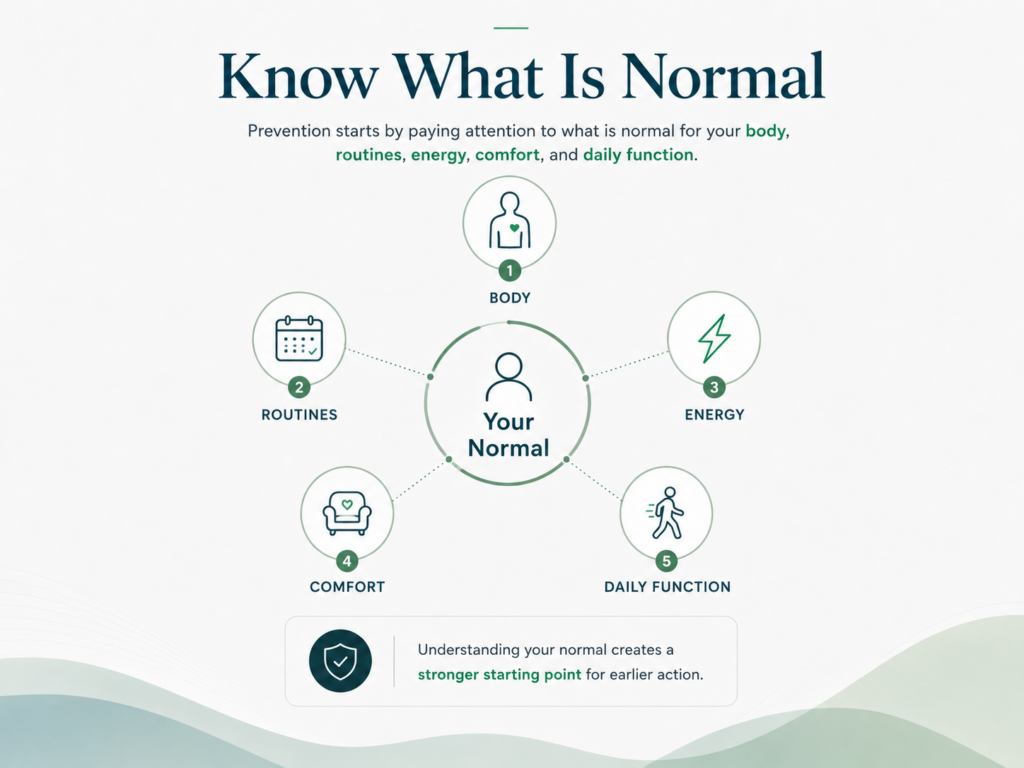
Prevention starts with paying attention.
Knowing what is normal for your body, routines, energy, comfort, or daily function can make it easier to recognize when something changes. Not every change is serious, but persistent or unusual changes are worth noticing.
Understanding your normal creates a stronger starting point for earlier action.
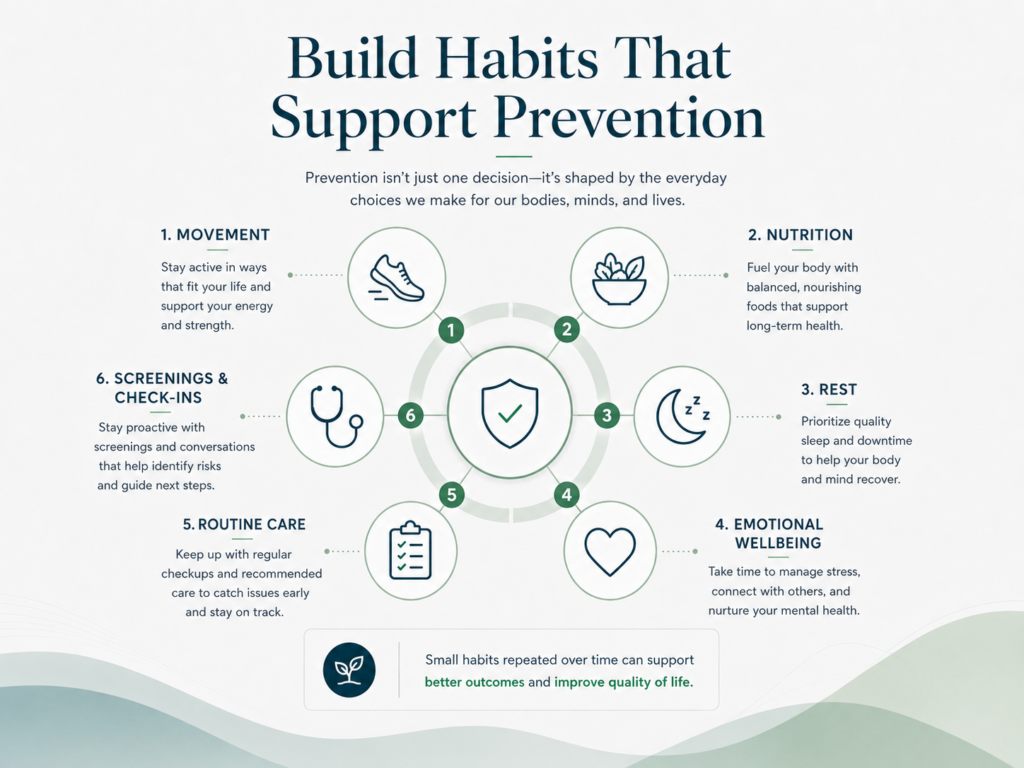
Prevention is shaped by everyday choices.
Movement, nutrition, rest, emotional wellbeing, routine care, screenings, and regular check-ins all help create a stronger foundation for long-term health.
Small habits repeated over time can support better outcomes and improve quality of life.
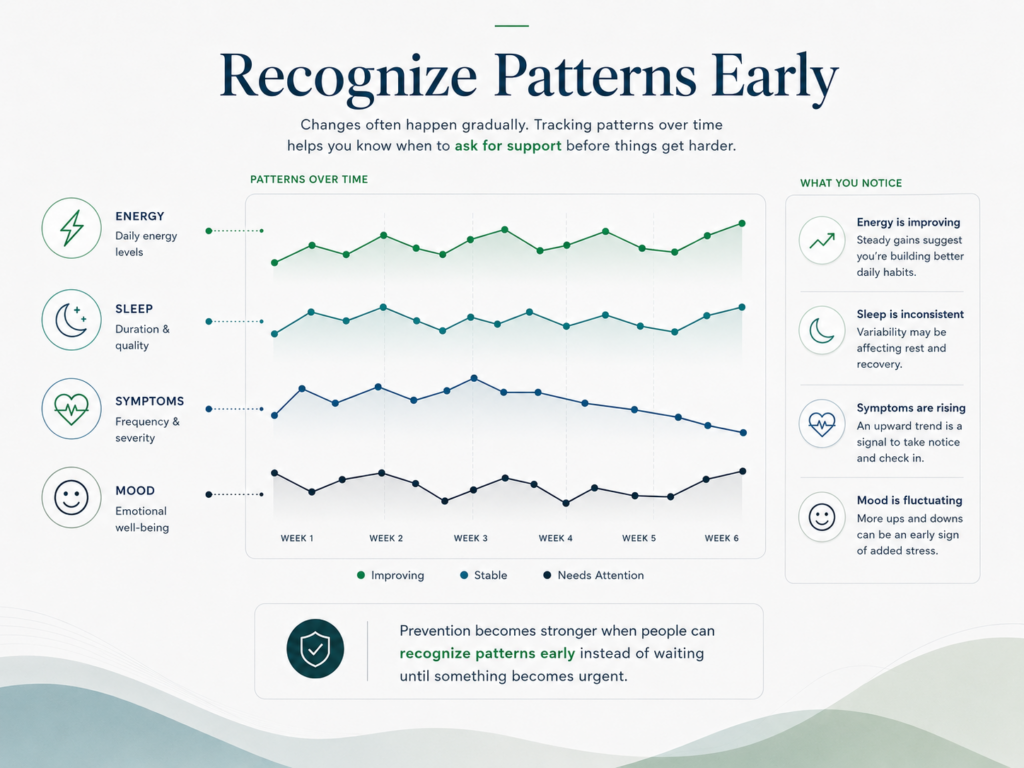
Changes often happen gradually.
Tracking symptoms, energy, pain, mood, appetite, sleep, movement, or other patterns can help people understand what is changing and when to ask for support.
Prevention becomes stronger when people can recognize patterns early instead of waiting until something becomes urgent.
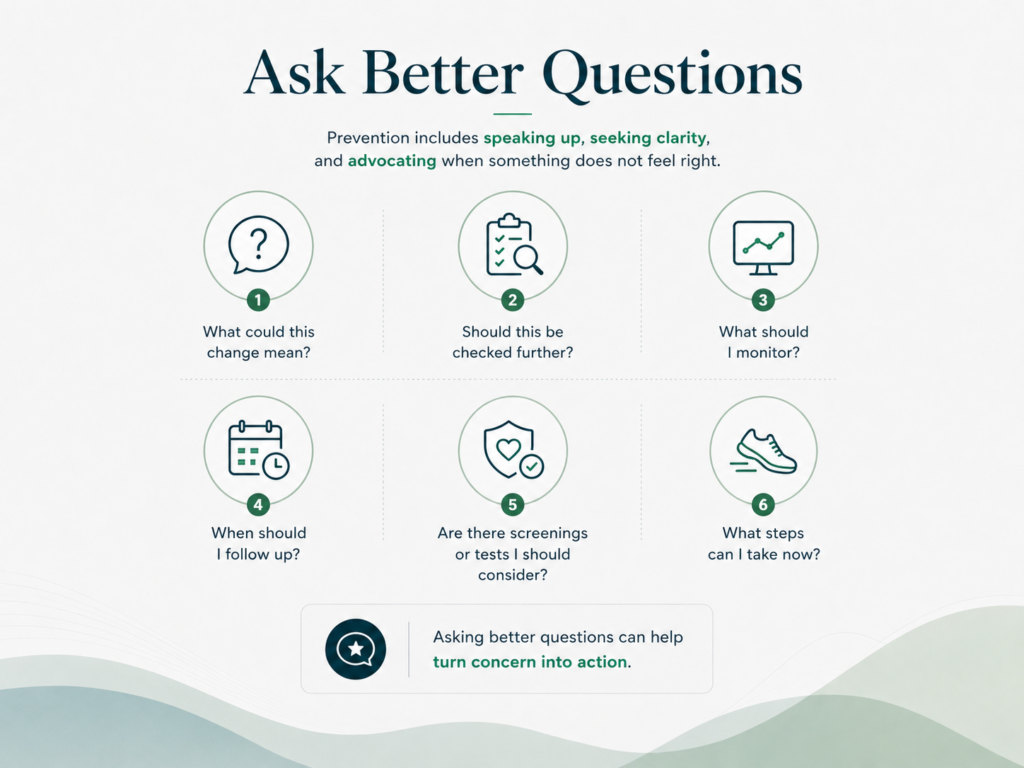
Prevention includes learning how to speak up.
People should feel empowered to ask questions, request follow-up, seek clarification, and continue advocating when something does not feel right.
Helpful questions may include:
What could this change mean?
Should this be checked further?
What should I monitor?
When should I follow up?
Are there screenings or tests I should consider?
What steps can I take now to reduce risk or support my health?
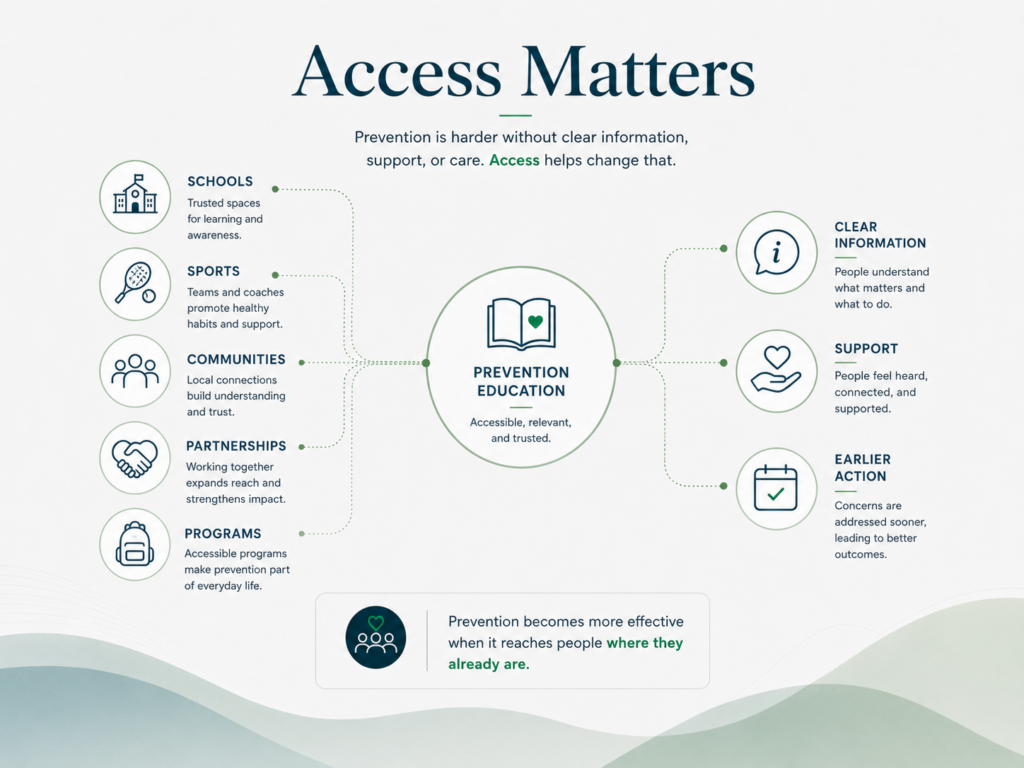
Prevention is harder when people do not have access to clear information, support, or care.
E.R.I.C. works to bring education into schools, sports, communities, partnerships, and programs so more people can receive information before they are in crisis.
Prevention becomes more effective when it reaches people where they already are.
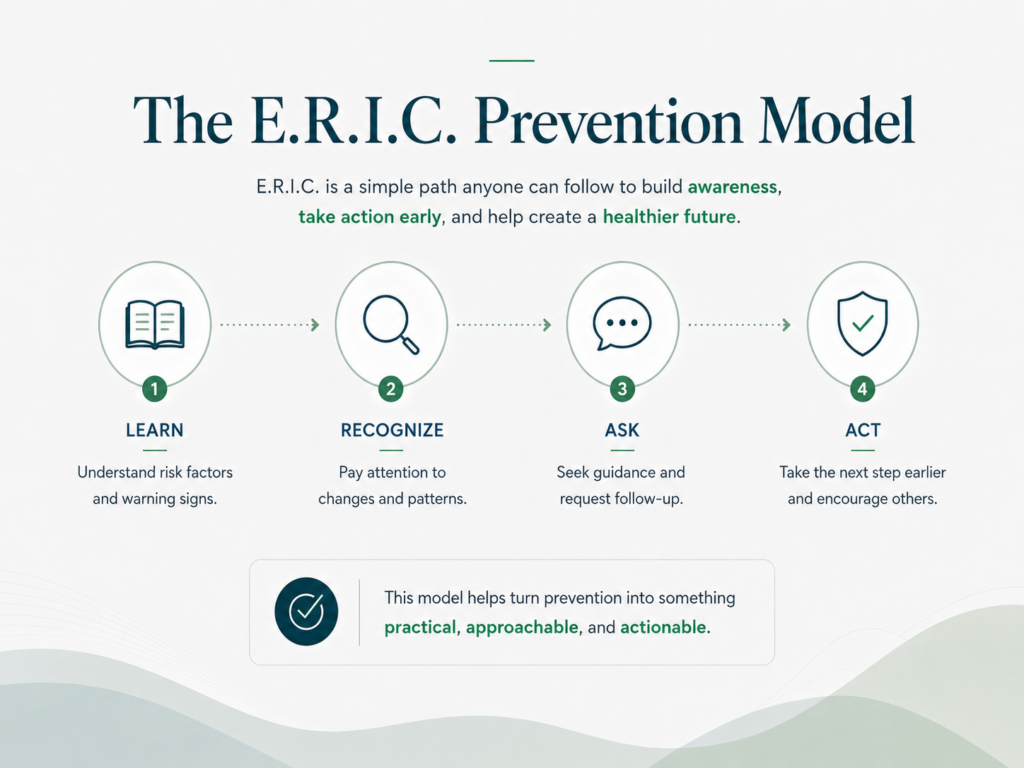
E.R.I.C.’s prevention work is built around a simple path: